{.portrait}
### Dr. Swann Martinez
{.portrait}
### Dr. Rémy Sohier
note:
⏭️
--
## Nos casquettes 🧢
---

---
---
note:
**All three productions** use similar software environments, with some differences.
**To improve clarity**, DCCs beyond the pipeline scope are shown in gray.
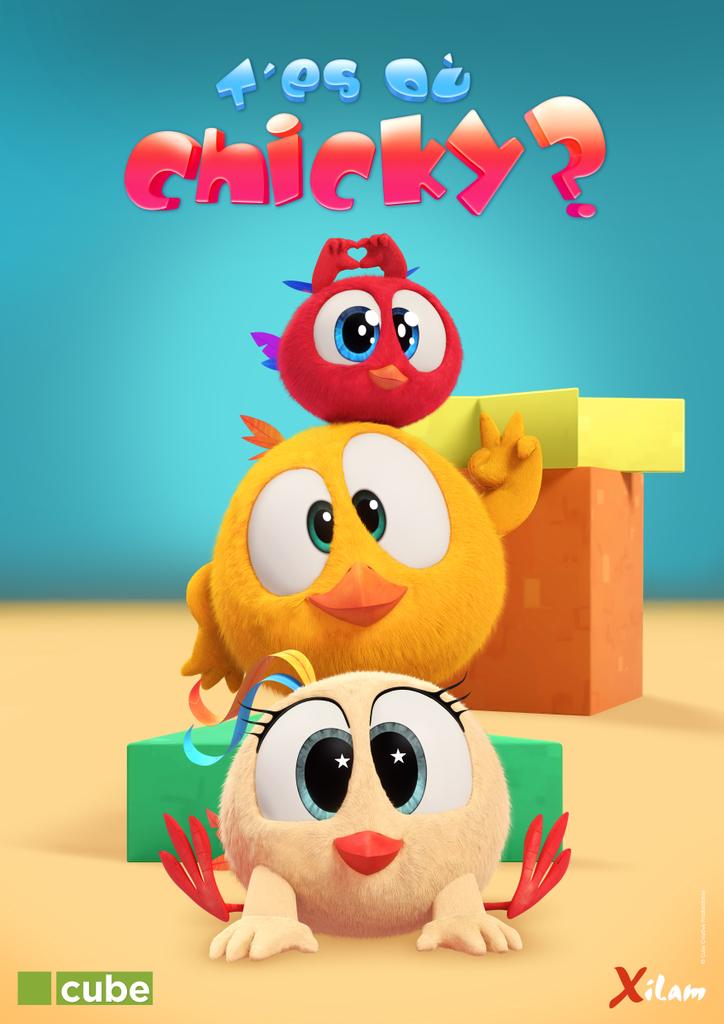
On *Where's Chicky* ...
On *OhWow* ...
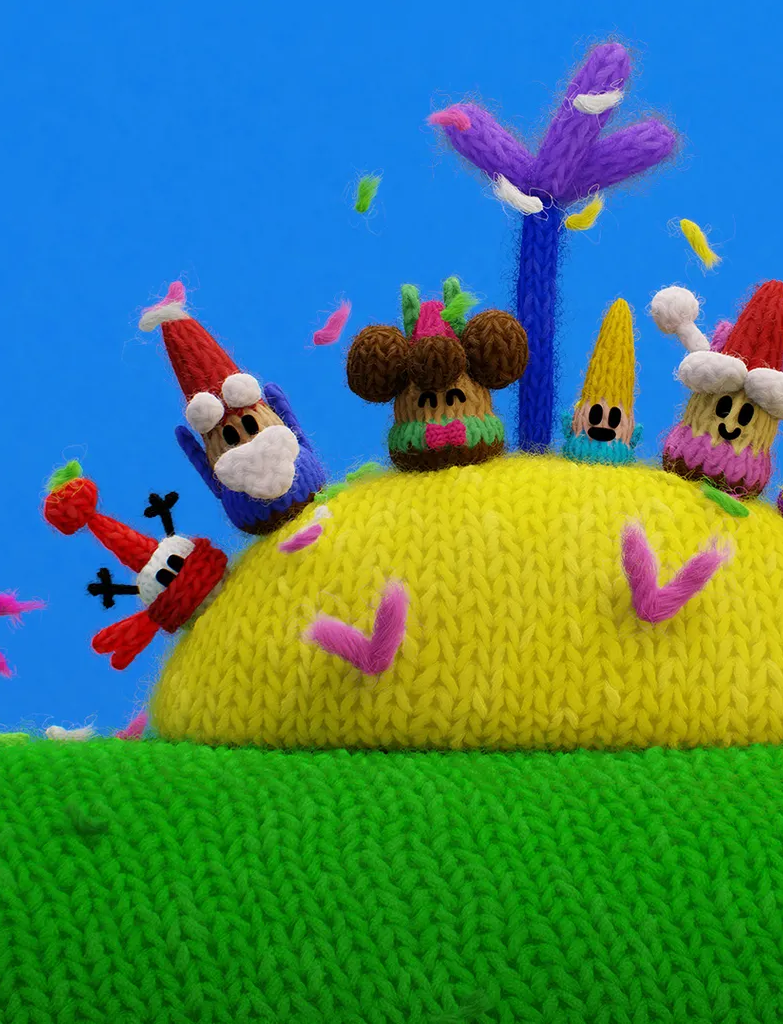
On *Wooly Wooly* ...
**Storyboard Pro** is used in all three cases for storyboarding during pre-production.
**For post-production**, Nuke and the Adobe suite are also used.
**However**, Blender is the main 3D production tool for all three, and Kitsu is used for production tracking. ⏭️
--
### Recapitulatifs du workflow simplifié
- Des formats de projets similaires{.fragment data-fragment-index="0" }
- Des étapes de fabrications similaires {.fragment data-fragment-index="1" }
- Des DCC's
[1] similaires{.fragment data-fragment-index="2" }
**Mais qu'en est-il du dataflow ?**
note:
**To summarize** the details we just covered,
we have three projects with similar formats, as well as similar production steps and DCCs.
**But what** about the underlying dataflow? ⏭️
--
### Dataflow
{width=700}
note:
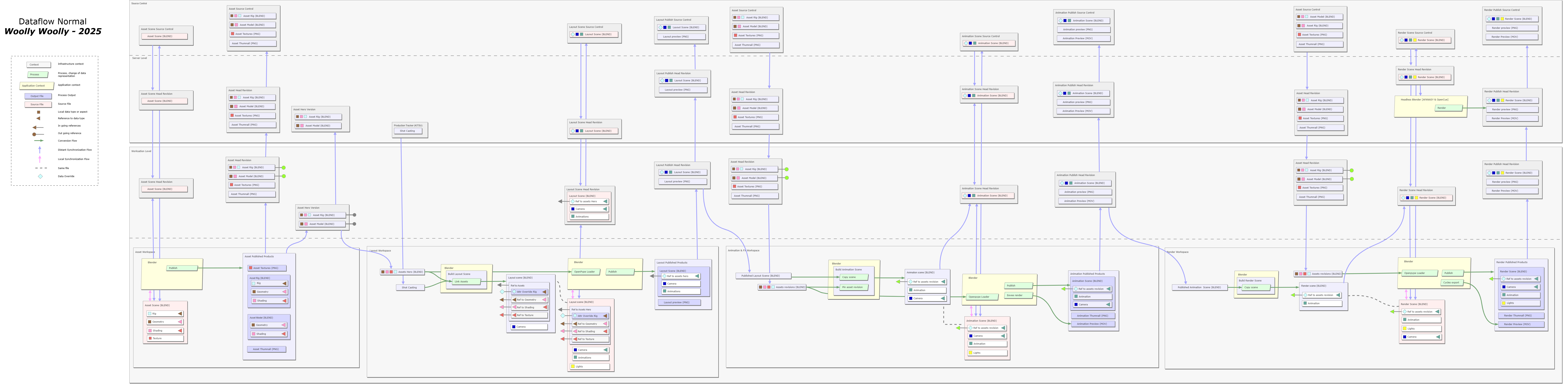
What is fascinating about this study is that the mapped pipelines show some similarities, but above all, many differences. Especially in dataflows ⏭️
--


{width=1200}
note:
**I know** it's hard to see everything here ^^
**But even from a distance**, you can visualize three **very** different dataflows! ⏭️
--
## Aspects étudiés
Stratégies de construction de scène {.fragment}
Schémas de propagation de mise à jour asset{.fragment}
Achitecture d'infrastucture {.fragment}
Implications de formats standards {.fragment}
Resource libraries{.fragment}
Stratégies de versionning{.fragment}
Environement logiciel{.fragment}
... {.fragment}
note:
**These mappings allowed us** to study many aspects of the audited pipelines!
**Among these**, we have...
**As we won't** have time to cover all these points in detail, we've selected the most significant one for this presentation. The full details will be published in an upcoming article. ⏭️
--
Asset update propagation patterns
*How update propagate through the fabrication ?*
note:
**Work propagation** is one of the most interesting aspects to study.
In a pipeline, this term refers to how update propagate through the fabrication process. ⏭️
--
## Tow mecanisms used
### ⬆️ Push{data-id="push"}
**Automatic** updates when an asset is published
### ⬇️ Pull
Updates applied **manually** from shots
note:
**In the three pipelines studied,** we identified two main assets propagation patterns:
-The Push, where updates are automatically propagated
-The Pull, where updates are manually retrieved
**Let’s take a closer** look at how this is modeled in a Blender dataflow... ⏭️
--
## Assets updates propagation : Recap'
*Three strategies to do it*
{.portraitsquared}
---
- **Push** for static assets.
- **Pull** for animated assets
---
= Per-asset type strategy
{.portraitsquared}
---
- **Pull** accross all the production
---
= Global strategy
{.portraitsquared}
---
- **Push** for all asset until Layout
- **Pull** from Animation
---
= Per-step strategy
note:
**À quick recap of** propagation strategies per production
**On Chickies,** the push is mainly used for static assets, pull for animated assets
**On holala,** the pull is used everywhere
**And finally,** we have an hybrid strategy per shot step for wooly wooly. ⏭️
--
### Push 🆚 Pull
**+**
Support asset's fast iteration
Reduce development effort
**-**
Less control over updates propagation
Require a good communication
**+**
Update control granularity
Better history tracking
**-**
Require tools developments
Slow asset iteration
note:
**Let's briefly** look at some advantages and disadvantages of these two complementary methods.
**On one hand,** the push supports fast asset iteration, but it does not allow for granular control over updates in shot files—pull is preferable here.
**On the other hand pull makes it easier** to respect a validation chain.
**From a purely technical perspective**, the pull requires more development effort, since updating references means opening scenes and changing links.
**The Push pattern relies entirely on Blender's** native mechanisms and therefore requires very little development from the pipeline team.
---
## Limites et futures de l'étude
note:
**Unfortunately,** we won't have time today to go further into the details of the data we collected.
**However,** feel free to come see us after the presentation if you would like more information.
**Before we finish,** let's look at the limitations and future directions of this study ⏭️
--
### 🗺️ Méthode cartographique
**🔒 verroux identifiés**
- ~~Overrides d'attributs~~
- ~~Interactions avec le production tracker~~
- Données de validation
**🗝️ Propositions**
-
- Interactions avec le production tracker
- Données de validation
note:
First of all, it's important to note that the mapping methodology we used for dataflow did not provide a way to represent Blender's override mechanism.
It also did not address the role of the production tracker.
We therefore extended the set of our diagrams to include these two elements.
We plan to share a library of shapes for drawio/diagram.net to make it easier to create these diagrams. ⏭️
--
### 🧫 Échantillons
**Limites**
- Studios français
- Format de série d'animation
**Futur**
- Élargir les formats de projet
- Élargir aux autres studios européens
note:
Initially, the study focused on a small group of companies to explore the project's feasibility. Additionally, we only examined TV series projects. ⏭️
--
### Publication sur
**En cours**
- Publication des cartographies en ligne sur HAL
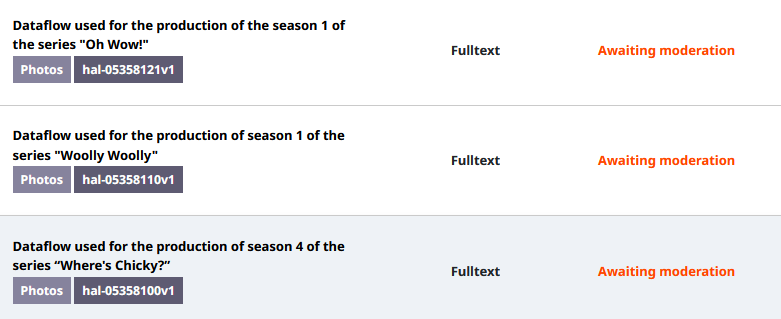
- Rédaction d'un article de synthèse sur le premier volet
**Future**
- Mise a disposition des template de diagrammes
- Ouverture d'une collection HAL dédiée au études cartographie pipeline
--
## Merci !
### 📧 Participer à l'étude
{width=300}
### ❤️ Merci aux contributeurs
- Félix David (Normaal)
- Christophe Seux (Autour du Volcan)
- Florentin Luce (Autour du Volcan)
- Axel Tillement (Cube Creative)
note:
Thanks a lot for listening !
If you represent a studio and are interested in participating, feel free to come talk to us directly or send an email to this address!
Don't hesitate to reach out if you have any questions!









 Et plein d'autres !
note:
Lorsque l'on cherche des connaissances et outils pipe. De nombreuses initiatives existent...
Mais Damien Coureau en parlera mieux dans la conférence suivante !
--
### Avec des résultats tangibles
Et plein d'autres !
note:
Lorsque l'on cherche des connaissances et outils pipe. De nombreuses initiatives existent...
Mais Damien Coureau en parlera mieux dans la conférence suivante !
--
### Avec des résultats tangibles

 note:
--
## Education
Combler un fossé entre l'éducation et l'industrie
- Fournir des données en phase avec la réalité
- Faciliter l'intégration de nouveaux artistes
note:
Aider les étudiants et les écoles à comprendre comment les studios fonctionnent vraiment — et pas seulement la version idéalisée des manuels.
note:
--
## Education
Combler un fossé entre l'éducation et l'industrie
- Fournir des données en phase avec la réalité
- Faciliter l'intégration de nouveaux artistes
note:
Aider les étudiants et les écoles à comprendre comment les studios fonctionnent vraiment — et pas seulement la version idéalisée des manuels.  --
## Hypothèses
- Il existe quelque chose de **plus profond que le workflow**.
- Avec un **modèle de visualisation standard**, nous devrions pouvoir comparer les pipelines.
- Le pipeline pourrait être **non transférable** d'un studio à l'autre.
--
## Périmètre de l'étude
- Studios français (alumni)
- Animation 3D
- Studio avec un état d'esprit opensource
note:
Ces contraintes nous ont amenés à restreindre le périmètre de notre recherche.
Pour mener une étude comparative, nous nous sommes concentrés sur l'animation 3D.
Pour faciliter l'accès aux données et contourner les problèmes de confidentialité, nous avons privilégié les entreprises ayant une culture open source.
--
## Protocole de collecte des données
*- Comment récupérer et visualiser les informations sur les pipelines ? -*
note:
Le principal défi était de trouver un moyen de récupérer et de représenter les données des pipelines des studios ! Voyons comment nous avons procédé ⏭️
--
### Étape 1: Entretients semi-dirigés
--
## Hypothèses
- Il existe quelque chose de **plus profond que le workflow**.
- Avec un **modèle de visualisation standard**, nous devrions pouvoir comparer les pipelines.
- Le pipeline pourrait être **non transférable** d'un studio à l'autre.
--
## Périmètre de l'étude
- Studios français (alumni)
- Animation 3D
- Studio avec un état d'esprit opensource
note:
Ces contraintes nous ont amenés à restreindre le périmètre de notre recherche.
Pour mener une étude comparative, nous nous sommes concentrés sur l'animation 3D.
Pour faciliter l'accès aux données et contourner les problèmes de confidentialité, nous avons privilégié les entreprises ayant une culture open source.
--
## Protocole de collecte des données
*- Comment récupérer et visualiser les informations sur les pipelines ? -*
note:
Le principal défi était de trouver un moyen de récupérer et de représenter les données des pipelines des studios ! Voyons comment nous avons procédé ⏭️
--
### Étape 1: Entretients semi-dirigés


 pour comprendre COMMENT le pipeline est modélisé.